Fine Dining POS
Built around the guest, not the transaction.
The POS for fine dining service. Seat-aware ordering, guest history that travels with your regulars, and live inventory across the menu and the cellar. Voice entry on the tablet for the servers who prefer dictating to tapping.
- version
- v1.3
- status
- live
- category
- Front of House
Every POS on the market was built for volume. Fine dining does not optimize for volume.
Generic POS systems force fine dining into a retail model: items, quantities, subtotals. They don't track seats, can't surface a guest's history, handle modifications as freeform text the kitchen has to decode, and go dark the moment the check closes. The guest is forgotten.
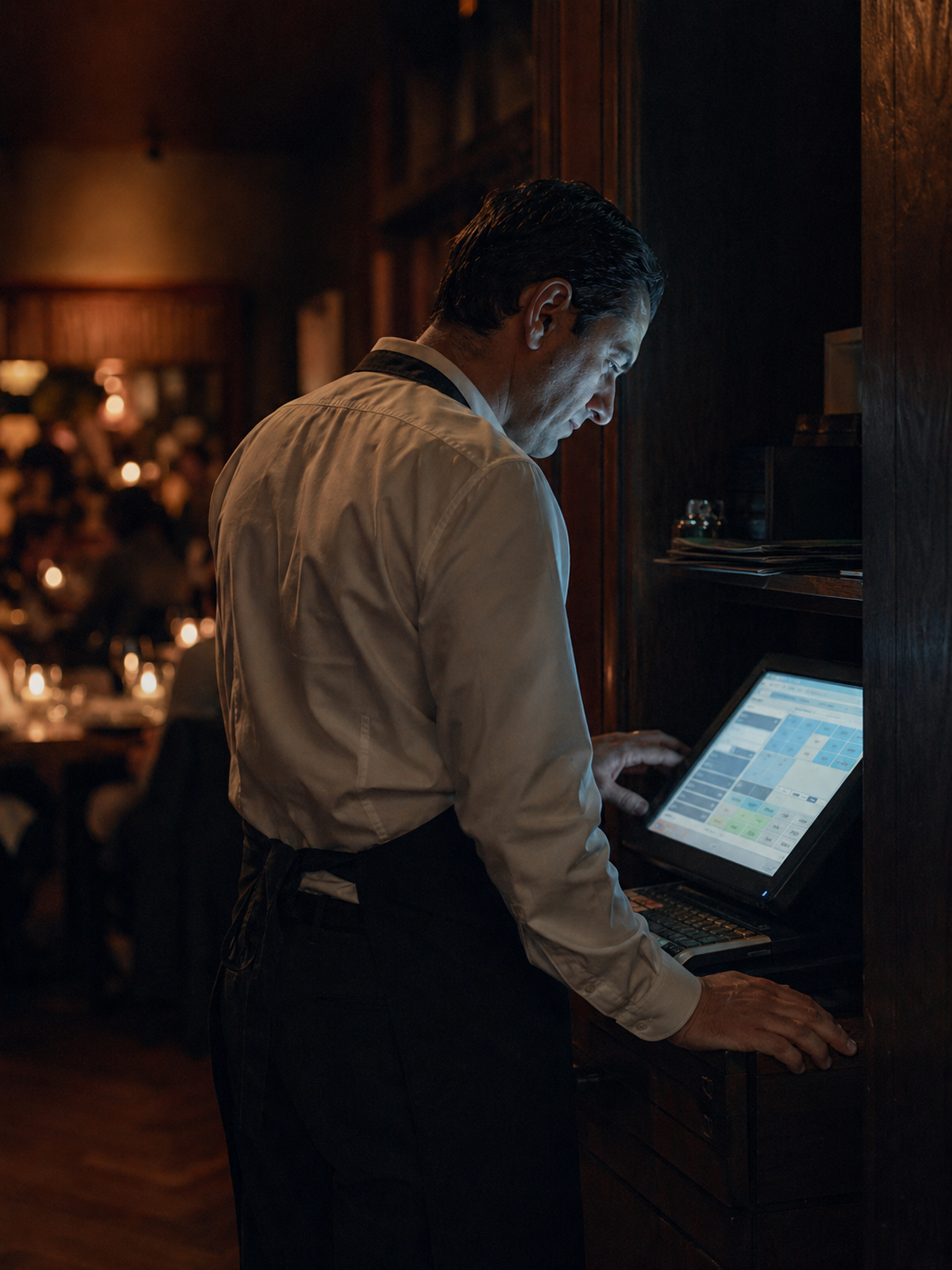
A POS that knows the guest at the table and the bottle in the cellar.
Mise was designed for fine dining from the start. Seat numbers are native to the order model. Guest profiles surface as a table opens: preferences, past orders, dietary flags. Your team can recommend, anticipate, and accommodate without breaking the flow of service. The cellar and the specials board are live in the system, depleting against every cover. Voice entry sits on the tablet for servers who prefer dictating.
A single service, start to finish.
- 01
Evening prep
Kitchen sets start levels for tonight's specials. The cellar inventory is current. Guest profiles for tonight's reservations are loaded.
- 02
Table opens
Server opens the table. Returning guests are flagged immediately. Preferences, past orders, dietary notes, and any personal details surface without the server having to look them up.
- 03
Order entry
By seat number, voice or tap. Modifications are structured. Allergen flags from recipe management surface inline. Every item routes to the right kitchen station.
- 04
Floor and kitchen stay in sync
Specials count down in real time. The wine list reflects the live cellar. Runners know exactly which seat gets what. When a bottle runs out, the system surfaces a replacement suited to your guests.
Every feature, in plain language.
Seat-aware ordering
Every item is assigned to a seat number at entry. No 'who had the chicken?'. Your staff knows, and so does every runner and expo down the line.
Guest intelligence
The POS surfaces guest history as you open a table: past visits, ordering patterns, preferences, and dietary flags. Your team makes better recommendations without asking.
Real-time inventory with start levels
Kitchen sets a start count for each special before service. The POS tracks every cover in real time and alerts the floor before quantities run out. No mid-service surprises.
Wine cellar tracking
Every bottle sold depletes the cellar in real time. The floor always knows what's available. When a wine 86s, the POS can surface the best replacement for your clientele.
Rich modifications, clean to the kitchen
Modifications are structured entries, not freeform notes. What the kitchen sees is formatted for the line: clear, unambiguous, attached to the right seat.
Flexible check splitting
Split by seat, by item, by even divide, or any combination. Because seat numbers are native to every order, splitting by seat is one tap.
Fine Dining POS doesn't work alone.
Every module shares one database, so data crosses the platform the moment it's created.
Fine Dining POS for $99 a month.
Add Fine Dining POS on its own for one restaurant location, or combine it with the rest of the Mise platform. Add more modules whenever your operation is ready.
See all module pricing